SOC 2 and ISO 27001 are security frameworks that are both well respected. Both have a similar audience: an end user that wants to ensure that your organization has controls or programs in place to protect the security, confidentiality, and availability of data. So how do you decide? Let’s look at both frameworks and factors that can influence your decision.
What is ISO and SOC compliance?
ISO/IEC 27001 is an international standard on how to manage information security. The standard was originally published jointly by the International Organization for Standardization and the International Electrotechnical Commission in 2005 and revised in 2013.
ISO 27001 is the only auditable international standard that defines the requirements of an information security management system (ISMS). An ISMS is a set of policies, procedures, processes, and systems that manage information risks, such as cyberattacks, hacks, data breaches, or theft.
SOC 2, or Service Organization Control 2, reports on various organizational controls related to security, availability, processing integrity, confidentiality, and privacy. It is a voluntary compliance standard for service organizations, developed by the American Institute of CPAs (AICPA), which specifies how organizations should manage customer data.
A SOC 2 report is tailored to the unique needs of each organization. Depending on its specific business practices, each organization can design controls that follow one or more principles of trust. These internal reports provide organizations and their regulators, business partners, and suppliers with important information about how the organization manages its data.
There are two types of SOC 2 reports: Type I describes the organization’s systems and whether the system design complies with the relevant trust principles. Type II details the operational efficiency of these systems.
How do you gain ISO and SOC compliance
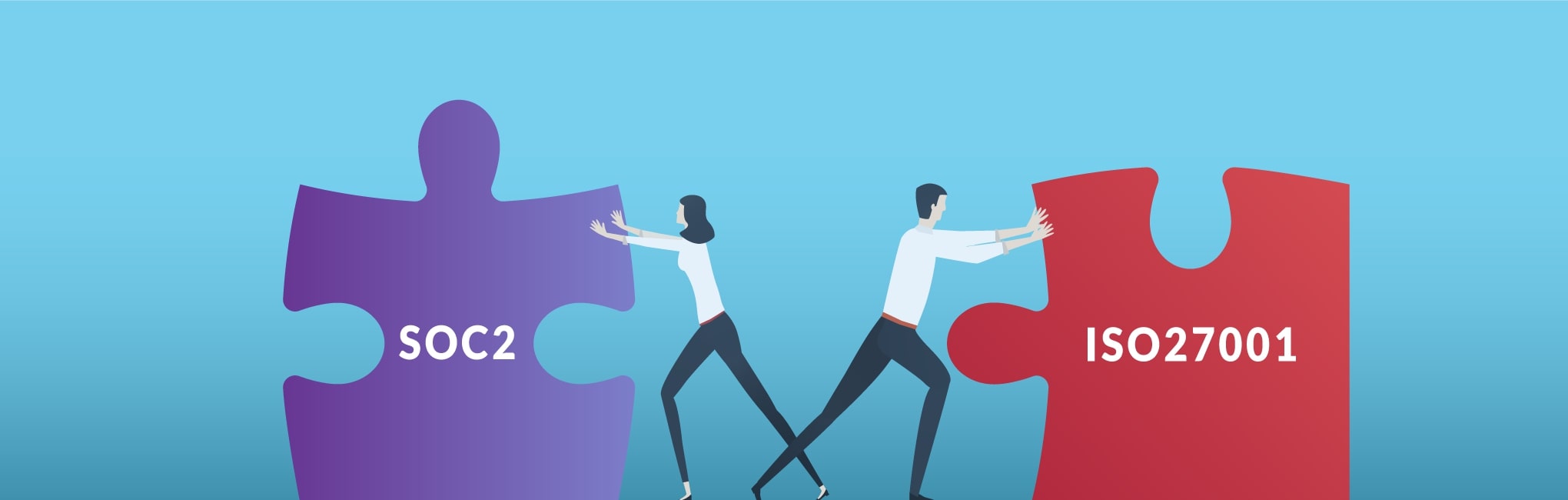
To show compliance with SOC 2 (Type 1 or Type 2), the organization will need an attestation report on how principles have been met. This is an independent auditor’s opinion of how well your organization is meeting various security, confidentiality, availability, processing integrity, and privacy principles to protect all aspects of your system. A licensed CPA firm attests SOC 2.
The organization chooses the controls to be evaluated and tested, making the audit more agreeable for those who are still maturing security functions and easier to achieve for younger companies. The report also includes non-security controls, which are good for building trust with customers, including corporate governance, vendor management, and aspects of confidentiality, availability, and privacy..
For ISO 27001 certification, the auditor or certifier will be looking at things as more black or white: is the requirement included within your ‘ISMS’ or not? ISO certification is measured against a more rigid controls framework stating its intention to be applied to an organization of any size. Though the certification is more well-known and well-respected internationally, it can be difficult (in terms of time and money) for a young, less mature organization to do well in this one-size-fits-all framework.
ISO certification can take nine months to three years to successfully implement. It is possible to self-attest rather than certify, which may be accepted by some customers. Organizations are required to establish an ISMS, for establishing, implementing, maintaining, and continually improving their information protection practices, then the design of the ISMS program will be tested. A recognized ISO 27001-accredited registrar certifies ISO 27001.
What is the difference between ISO 27001 and SOC 2?
The main difference between the ISO 27001 and SOC 2 is that SOC 2 is primarily focused on proving you’ve implemented security controls that protect customer data, while ISO 27001 also asks you to prove you have an operational Information Security Management System (ISMS) in place to manage your InfoSec program on a continual basis.
SOC 2 vs. ISO 27001: Which one is right for you?
Both frameworks are designed to instill trust in clients that your organization is protecting their data and share up to 96 percent of the same security controls for policies, processes, and technologies designed to protect sensitive information and up to 30 percent of the controls for confidentiality integrity, and availability.
Both are reputable independent, third-party-attested certifications in the U.S., though ISO 27001 is more accepted internationally.
Therefore, if you’re deciding between a SOC 2 audit or an ISO 27001 certification, it may be best to ask the most important stakeholder: The client asking for certification.
Consult DTS
Achieving compliance with either framework will earn your client’s trust and provide solid ROI.
DTS provides tailored, scalable cyber solutions for small- and medium-sized organizations. We use top resources and the expertise of talented individuals with a passion for excellence to help protect our clients’ people and data.
Our approach is consultative and education oriented. You can feel confident that your DTS solution is strong, reliable, and helping to drive a culture of compliance. Choose DTS for security reviews and assessments, remediation, managed services, licenses, and fractional CIO services. Visit DTS website: Contact page to schedule a consultation call.